Introduction
The modern kitchen has transformed significantly over the past decade, with air frying technology becoming increasingly central to how families approach meal preparation. What started as a niche cooking method has evolved into a mainstream approach embraced by home cooks who value efficiency, health-conscious cooking, and the convenience of preparing diverse meals simultaneously. The dual-basket air fryer represents an interesting evolution in this space, addressing a challenge many busy households face: the need to cook multiple dishes with different cooking times and temperatures at the same time.
The Ninja DZ201 Foodi addresses this specific need by introducing independent frying baskets that can operate with complete autonomy from one another. This isn’t simply a larger air fryer with twice the capacity—it’s a fundamental reimagining of how concurrent meal preparation might work in a home kitchen environment. Whether you’re managing a family with different dietary preferences, preparing components of a more complex meal, or simply trying to streamline your cooking workflow, this dual-basket approach offers distinct advantages worth exploring.
Understanding how this appliance functions and what it brings to everyday cooking requires looking beyond specifications to consider practical applications and real-world usage scenarios.
Key Features and Technical Specifications
Independent Dual-Basket System
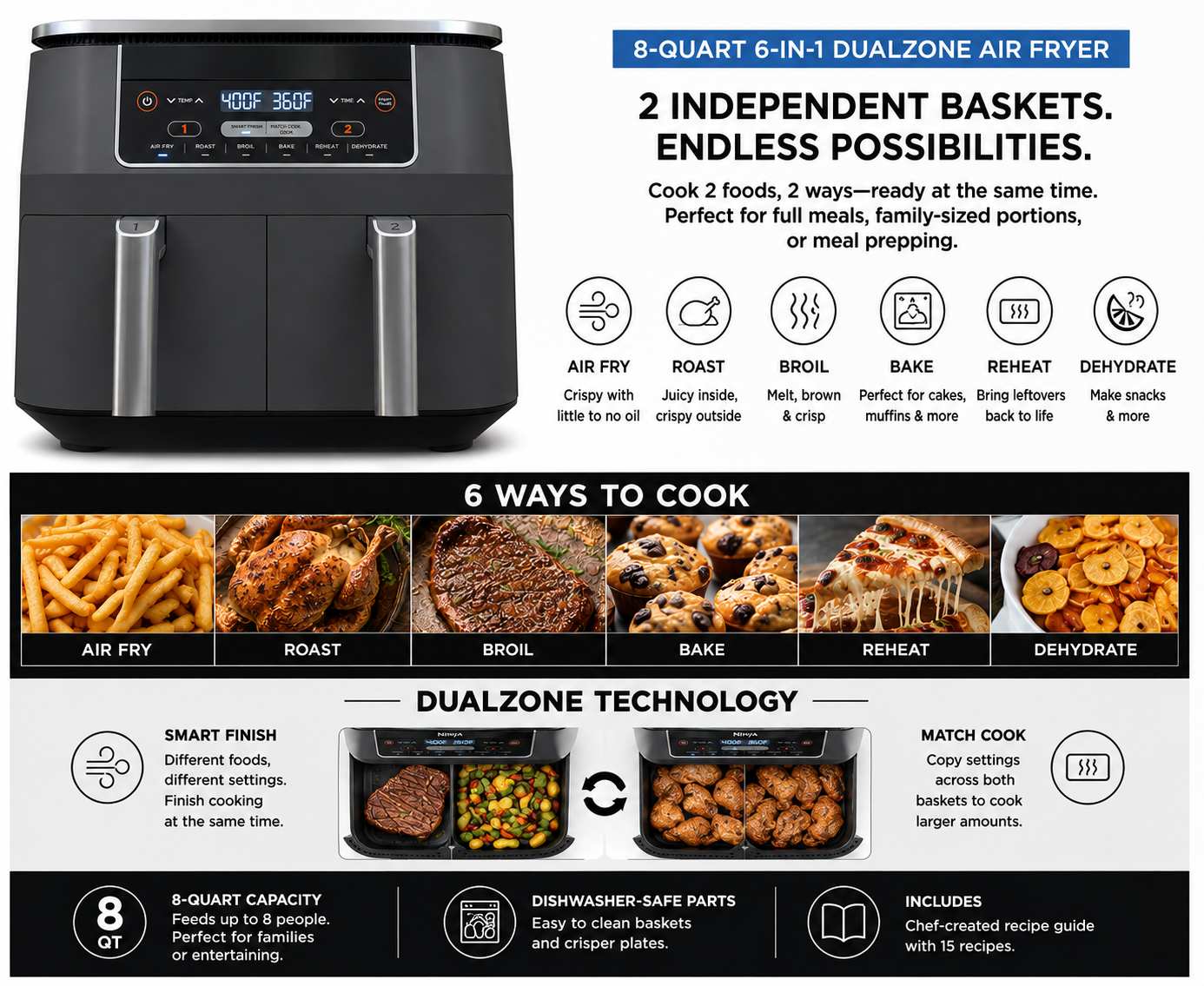
The defining characteristic of this model lies in its dual-basket configuration where each basket operates independently from the other. This means you’re not simply splitting one cooking chamber into two sections—you have two separate cooking environments that can maintain different temperatures and cooking times simultaneously. One basket might be air frying chicken wings at 400°F while the other gently dehydrates herbs at 160°F. This level of autonomy eliminates the compromise that typically comes with shared cooking spaces.
The capacity of eight quarts combined across both baskets provides substantial volume for household meal preparation. To contextualize this dimension, eight quarts is notably larger than many single-basket air fryers on the market, yet the dual configuration means this capacity is distributed in ways that maintain flexibility and prevent overcrowding within individual baskets.
Multiple Cooking Methods
Beyond traditional air frying, this unit integrates six distinct cooking functions into its operational repertoire. The air frying function remains the primary mode, utilizing rapid air circulation technology to create crispy exteriors and moist interiors through significantly reduced oil requirements compared to traditional deep frying methods.
Roasting capabilities expand the appliance’s utility beyond fried foods. The roasting function provides a gentler approach suitable for vegetables, proteins, and other foods where you might want browning without the intense crisping that air frying produces. This distinction matters practically—certain dishes benefit from the Maillard browning that roasting provides, separate from the specific texture air frying creates.
Broiling functionality adds another layer of versatility. Broiling applies direct, intense heat from above, making it suitable for finishing dishes, melting cheese, or creating particular textures on the surface of foods. This vertical heat application differs substantially from the circulating air approach, expanding what the unit can accomplish.
Baking capabilities mean you can prepare items traditionally associated with conventional ovens. Cookies, small cakes, and other baked goods can be prepared in these baskets, making the unit genuinely multifunctional beyond savory applications.
Reheating features a dedicated mode that restores previously cooked foods to serving temperature without overcooking or drying them out—a practical consideration given that many households regularly reheat leftovers.
Dehydrating represents the function many overlook despite its genuine utility. Creating vegetable chips, fruit leather, or dehydrated herbs at home opens possibilities that most home cooks don’t regularly explore. The ability to maintain low, consistent temperatures over extended periods supports these culinary applications effectively.
Smart Cooking Features
The Match Cook technology presents an interesting approach to synchronization. When you want both baskets to operate on the same schedule, Match Cook coordinates their operation so they finish simultaneously. This prevents the scenario where one basket completes its cycle while you’re still waiting for the other, streamlining meal completion.
The Smart Finish feature demonstrates attention to practical cooking scenarios. Rather than rigidly adhering to predetermined cooking times, this technology allows for flexibility in finishing times based on how foods actually progress during cooking. Some ingredients naturally cook faster than others, and Smart Finish attempts to accommodate this reality rather than forcing uniform timing.
Construction and Design
Ventilation design is particularly important in air fryer units, as they produce steam and cooking vapors that must be effectively managed. The placement of exhaust systems significantly influences kitchen air quality during and after cooking.
The grey finish and overall industrial aesthetic integrate reasonably with contemporary kitchen design without demanding a complete design overhaul. The two independent baskets, each with their own non-stick surface, are designed for straightforward cleaning and maintenance. The control interface utilizes a digital touchscreen that provides visual feedback about cooking parameters and progress.
How It Can Be Used in Everyday Cooking
Managing Different Cooking Demands
Consider a typical family dinner scenario: you’re preparing chicken breast for some family members and roasted broccoli for others who prefer lighter accompaniments. The traditional approach requires sequential cooking or utilizing multiple appliances. With independent baskets, you prepare the chicken in one basket while simultaneously roasting vegetables in the other. Since each basket maintains its own temperature setting, neither dish influences the other’s cooking environment.
This capability becomes particularly valuable for households with varying dietary approaches or preferences. Pescatarians and omnivores can prepare their respective proteins simultaneously. Gluten-free preparations needn’t wait until non-gluten foods complete their cooking cycle.
Meal Component Preparation
Efficient dinner preparation often means breaking complex meals into components. You might prepare proteins in one basket while cooking starches in the other, then assemble everything together. A common application involves preparing proteins in one basket while a complementary side dish cooks in the other, reducing total meal preparation time compared to sequential approaches.
Batch Cooking and Meal Preparation
For those who dedicate time to meal preparation activities, the dual capacity becomes genuinely practical. Preparing multiple portions of similar items allows freezing prepared components for later use. Cooking several batches of marinated chicken or prepared vegetable medleys becomes more efficient when you’re not limited to single-basket capacity.
Entertaining and Gathering Scenarios
When hosting gatherings where you need to maintain various appetizers or dishes at different serving temperatures, the independent control becomes particularly useful. One basket might keep appetizers warm while another prepares fresh items for serving, creating a more dynamic entertaining approach.
Experimenting with Different Cooking Methods
The range of cooking functions invites experimentation. Dehydrating herbs or creating vegetable chips represents culinary territory many home cooks rarely explore, partly because dedicated equipment isn’t typically available. Having this capability integrated changes what seems practically achievable in a home kitchen.
Who This Unit May Be Suitable For
Families with Multiple Dietary Approaches
Households where different members follow different diets—vegetarian, keto, paleo, gluten-free—benefit significantly from the independent basket operation. Preparing different dishes simultaneously without cross-contamination or timing conflicts makes meal preparation substantially less complicated.
Serious Home Cooks
Those who have moved beyond basic cooking and seek to explore techniques like dehydrating, precise temperature control, and concurrent preparation of multiple components find the flexibility valuable. The range of functions supports culinary experimentation in ways simpler air fryers don’t.
Busy Professionals and Parents
When available time is limited, reducing meal preparation duration while maintaining meal complexity and quality matters considerably. The ability to prepare multiple components simultaneously directly addresses this time constraint.
Entertaining Enthusiasts
People who regularly host gatherings, whether casual or more formal, appreciate the ability to manage multiple dishes during preparation and serving phases. This facilitates entertaining at a larger scale without requiring multiple pieces of equipment.
People in Moderate-Sized Living Spaces
For those with kitchen space constraints, consolidating multiple cooking functions into a single unit—rather than maintaining a dedicated convection oven, dehydrator, and toaster oven—represents genuine space efficiency, assuming adequate counter real estate is available.
Important Things to Consider
Physical Space Requirements
An eight-quart air fryer with dual baskets occupies measurable counter space. Before purchasing, verify that your kitchen arrangement can accommodate this unit without creating awkward workflow disruptions. Some kitchens that seem to have adequate space functionally lack the specific configuration needed for comfortable appliance placement.
Power Consumption
Multi-function cooking appliances with powerful heating elements and dual independent cooking zones draw significant electrical current. Understanding your kitchen’s electrical capacity ensures you can operate this unit without creating breaker concerns. Some older homes may require electrical assessment before using such appliances.
Learning Curve for Multiple Functions
While air frying has become relatively intuitive for most users, exploring the full range of cooking methods requires some experimentation. The first attempts at dehydrating or broiling may require adjustment and learning. The included documentation and online resources help considerably, but realistic expectations about a learning period are important.
Cleaning and Maintenance Considerations
With two baskets and multiple cooking methods, cleaning logistics differ from single-basket units. Both baskets require regular cleaning, and the overall unit needs periodic attention. Understanding your comfort level with the maintenance demands matters practically.
Outlet and Placement Logistics
Proximity to electrical outlets influences where you can reasonably place this unit. Identifying the optimal location requires considering both accessible electrical sources and practical kitchen workflow.
Cooking Time Adjustments
Air fryer cooking times often differ from traditional oven specifications. Recipes may require adjustment for this specific unit. This learning process is relatively quick, but shouldn’t be overlooked when beginning to use the appliance.
Comparative Perspective on Dual-Basket Air Fryers
Single-Basket Versus Dual-Basket Approaches
Single-basket air fryers offer simplicity and lower spatial demands. They’re ideal for individuals or couples where simultaneous cooking isn’t a regular priority. Dual-basket models address scenarios where concurrent cooking with different parameters becomes commonplace rather than exceptional.
The practical difference extends beyond capacity. Single-basket units force sequential cooking or compromise on temperatures and timing. Dual-basket design acknowledges that real cooking often demands concurrent preparation of different items.
Size Considerations
Eight-quart capacity places this in the larger category of air fryer units. Smaller models sacrifice versatility for spatial efficiency. Larger models provide capacity but require proportional counter space. Your specific household size and entertaining frequency should guide what capacity genuinely serves your needs.
Function Integration
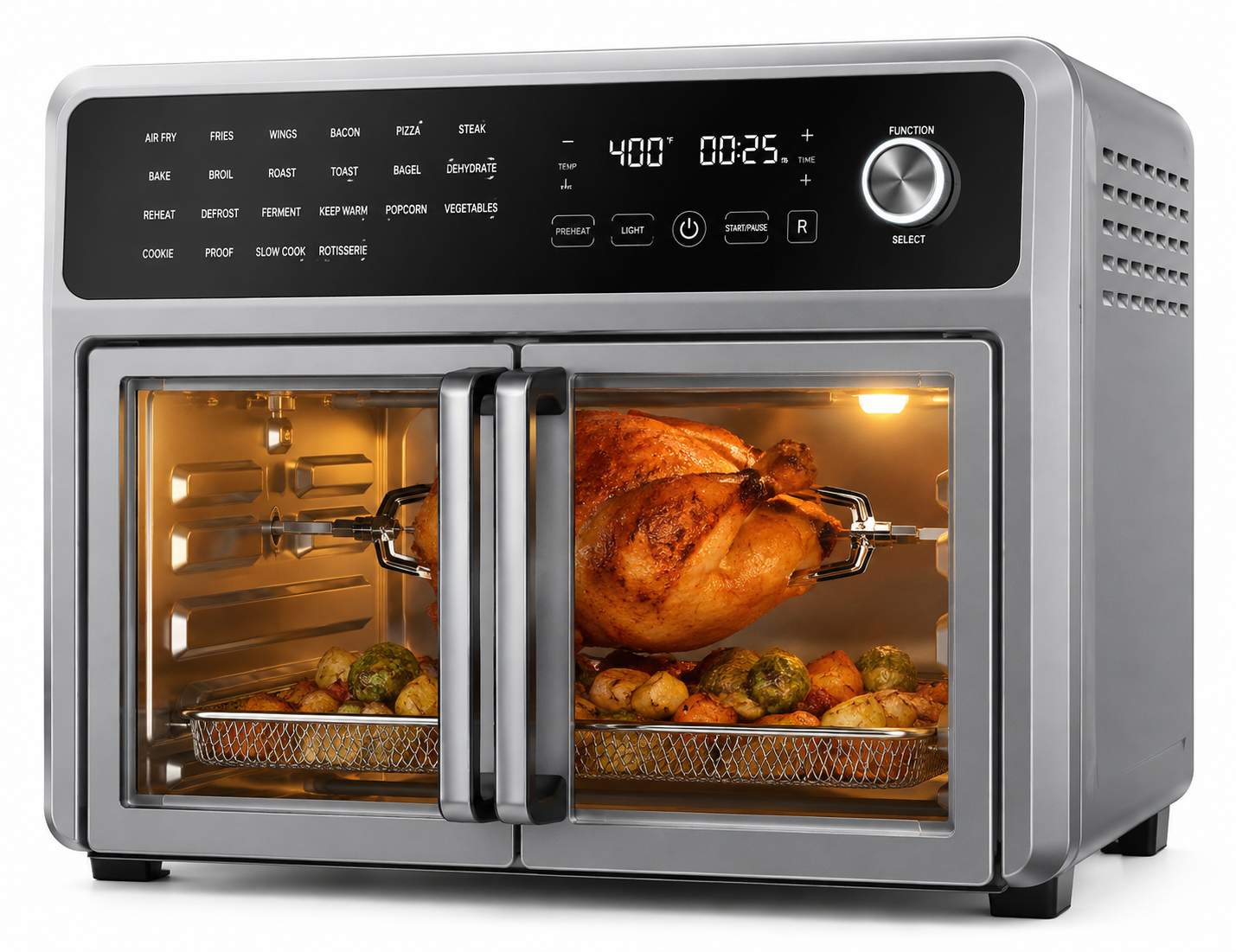
Some air fryer toaster ovens combine air frying with other functions like rotisserie or toast preparation. The Ninja’s approach focuses specifically on air frying and its related functions rather than attempting to also replace a toaster. This specialization allows deeper development of core air frying capabilities at the potential expense of multi-appliance replacement.
Frequently Asked Questions
How does Match Cook functionality actually work in practice?
Match Cook coordinates both baskets to reach their target temperature and complete cooking simultaneously. Rather than one basket finishing while you wait for the other, the system manages timing so everything is ready together. This requires some consideration during setup—you establish times and temperatures for both baskets before operation begins.
Can you use completely different recipes in each basket simultaneously?
Yes, this represents one of the core advantages. One basket might prepare air-fried protein while the other roasts vegetables, following entirely different recipes with different temperatures and timing. The independent operation makes this genuinely practical rather than requiring compromise.
What is the actual capacity per basket?
While the total unit is described as eight quarts, the capacity distributes across two independent baskets. This means each basket provides substantial but not unlimited capacity. You won’t fit an entire rotisserie chicken in a single basket, though you can certainly prepare multiple pieces or smaller items.
How long does the dehydrating function typically take?
Dehydrating times vary substantially depending on what you’re dehydrating. Vegetable chips might require four to six hours, while herb dehydration could take less time. The time commitment exceeds quick cooking applications but remains reasonable given that you’re creating shelf-stable ingredients for later use.
Is preheating necessary with this unit?
Like most air fryers, preheating optimizes cooking results. The digital display typically indicates when preheating is complete and the unit is ready for food addition. Preheating times are generally brief, usually under five minutes.
How does the non-stick coating perform over extended use?
Non-stick surfaces gradually diminish with use and cleaning. Proper care—using appropriate utensils, gentle cleaning methods, and avoiding excessive scrubbing—extends coating longevity. Many users report consistent non-stick performance for years with reasonable care, though some surface wear is inevitable with time.
Can you cook frozen foods directly?
Yes, one of air frying’s practical advantages is the ability to cook from frozen without thawing. Cooking times extend compared to room-temperature ingredients, but the convenience of skipping thawing steps appeals to many home cooks managing busy schedules.
What’s the noise level during operation?
Air fryers produce sound from fan operation. This model produces a moderate level of noise—not silent, but not excessively loud. If noise sensitivity is important in your kitchen environment, listening to a demonstration before purchasing provides useful perspective.
Conclusion
The Ninja DZ201 Foodi represents a meaningful approach to addressing realistic cooking scenarios that many household cooks face regularly. The dual-basket design isn’t simply a capacity increase—it’s a functional reimagining that allows concurrent cooking with complete parameter independence between baskets. This capability matters practically when you’re managing multiple dietary preferences, preparing meal components efficiently, or simply trying to reduce overall meal preparation duration.
The range of cooking functions—air frying, roasting, broiling, baking, reheating, and dehydrating—consolidates multiple appliances into a single unit. For those with space constraints or those seeking versatility, this integration offers genuine advantages. The smart cooking features like Match Cook and Smart Finish demonstrate attention to practical cooking realities rather than simply adding marketing terminology.
The learning curve is relatively modest for anyone with basic cooking experience, and the investment in understanding the full range of capabilities pays dividends through expanded cooking possibilities. Maintenance requirements are reasonable given the unit’s capabilities, and the build quality suggests reasonable durability with appropriate care.
This unit functions most effectively for households where concurrent cooking flexibility is genuinely valuable, whether due to family size, entertaining frequency, or personal cooking philosophy. For those situations, it represents a thoughtful approach to modern kitchen efficiency that goes beyond simple capacity expansion.